
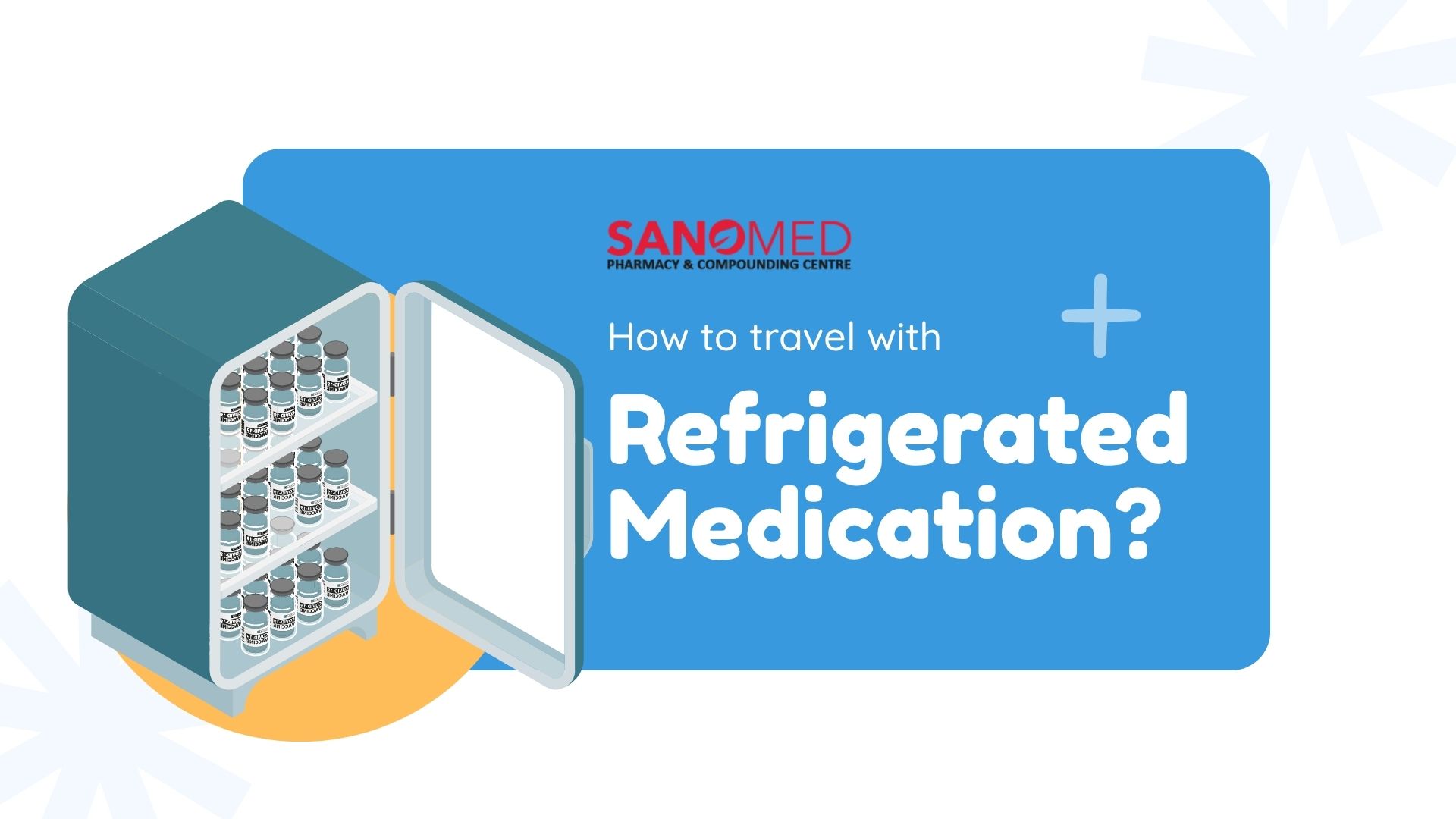
Travelling with refrigerated medication takes a little extra planning, but it doesn’t have to be stressful. Whether you’re going on a weekend getaway or an international trip, keeping your medication at the right temperature helps ensure it remains safe and effective.
A few simple precautions before you leave can help prevent unexpected problems during your journey.
Which Medications Need to Stay Refrigerated?
Some medications, including certain insulin products, biologic medications, hormone therapies, and compounded preparations, may need to be stored in the refrigerator. However, storage requirements aren’t the same for every medication.
Before travelling, check the storage instructions or ask your pharmacist how your specific medication should be transported.
How Can You Keep Medication Cold While Travelling?
An insulated medication travel case with cold packs is often the safest option. The goal is to keep your medication cool without allowing it to freeze, as freezing can damage some medications just as much as excessive heat.
If you’re travelling for several hours or spending the day outdoors, it’s a good idea to check the temperature of your storage case periodically.
Can Refrigerated Medication Go in Checked Luggage?
Whenever possible, keep refrigerated medication in your carry-on bag. Checked luggage may be exposed to extreme temperatures, delays, or even become lost during travel.
Keeping your medication with you also makes it easier to access if your travel plans change unexpectedly.
What If My Medication Gets Warm?
Many refrigerated medications can tolerate short periods outside the refrigerator, while others cannot. Because recommendations vary between products, it’s important not to assume the medication is still safe to use.
If you’re unsure whether your medication has been exposed to unsafe temperatures, contact your pharmacist before taking your next dose.
Should You Bring Extra Medication?
Delays, missed flights, or unexpected travel changes can happen. Bringing a little extra medication, along with your original prescription label, can help avoid unnecessary stress if your return trip doesn’t go as planned.
If you’re flying internationally, it may also be helpful to carry documentation explaining why you need the medication.
Speak With Your Pharmacist Before Travelling
Your pharmacist can review storage requirements, discuss travel tips specific to your medication, and answer questions before you leave. This is especially important for compounded medications, as storage recommendations may differ from commercially manufactured products.
If you’re located in Toronto, the pharmacists at SanoMed Compounding Pharmacy are here to help. As one of the few compounding pharmacies in Toronto where your compounded medication is prepared by a licensed pharmacist rather than a pharmacy assistant, we take pride in delivering personalized care with the highest standards of quality and precision. Whether you need travel advice, custom-compounded medication, or ongoing pharmacy support, our team is ready to help you every step of the way.



 Chat with a live AI agent