
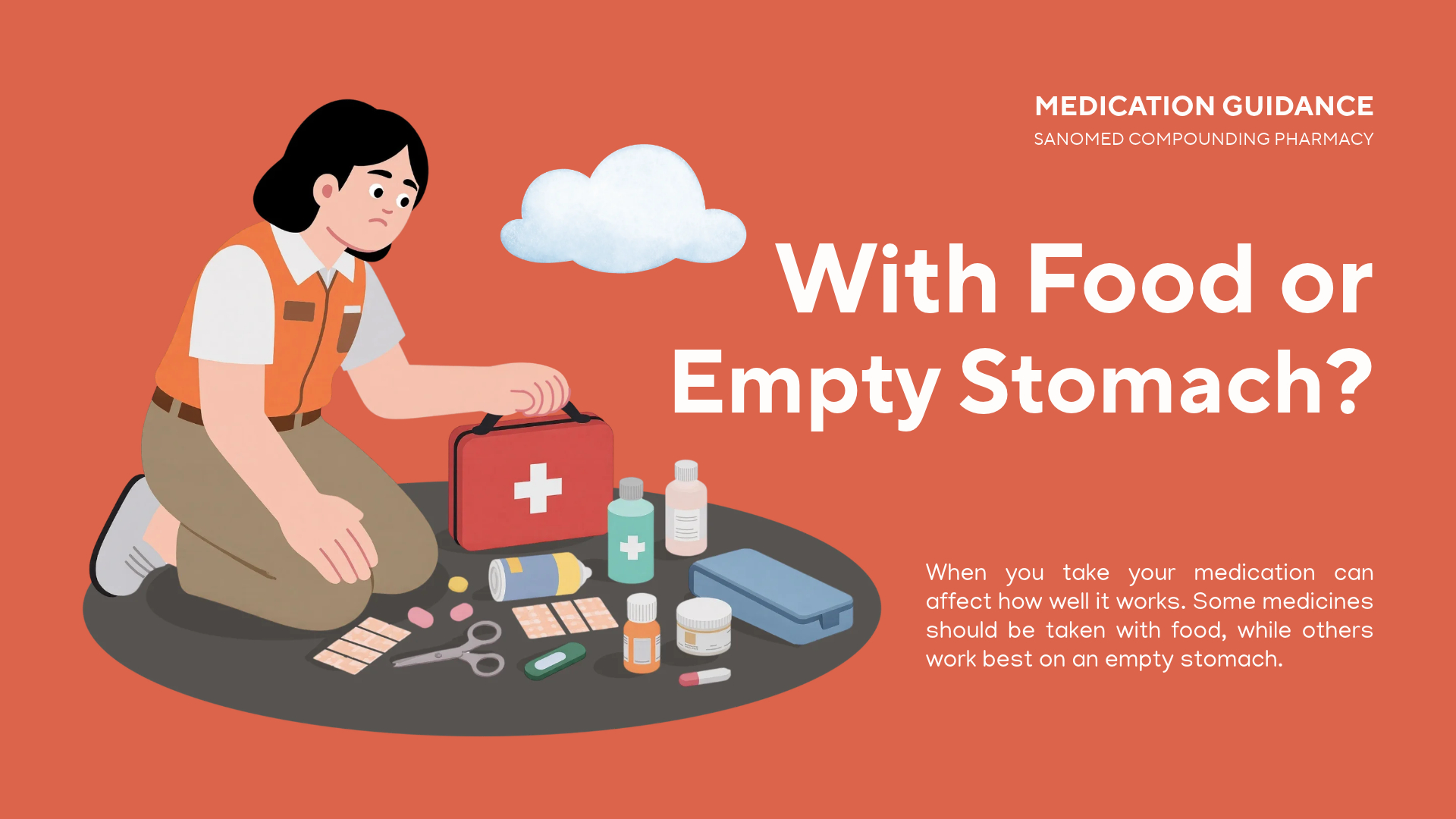
Medication instructions can sometimes seem oddly specific. One prescription may say “take with food,” while another says to take it on an empty stomach.
These directions are important because food can change how a medication is absorbed, how well it works, and how likely it is to upset your stomach.
Why Do Some Medications Need to Be Taken With Food?
Some medications are easier on the stomach when taken with a meal or snack.
Food can help reduce nausea, stomach irritation, or discomfort caused by certain medications. In other cases, eating may actually help your body absorb more of the medication.
When a label says “take with food,” it usually means the medication should be taken during a meal or shortly after eating.
The exact instructions can vary depending on the medication, so it is important to follow the directions provided by your pharmacist or prescriber.
Why Do Some Medications Need an Empty Stomach?
Food can sometimes reduce or delay the amount of medication your body absorbs.
For these medications, taking them around a meal could make them less effective or cause their effects to become less predictable.
“Take on an empty stomach” often means taking the medication about one hour before eating or around two hours after a meal.
However, the timing can differ between medications. Your prescription label should always be your first reference.
Can Food Make a Medication Stronger?
Yes. Food can sometimes increase medication absorption.
A meal, particularly one containing fat, may cause the body to absorb more of certain medications than it would on an empty stomach.
That is not necessarily a problem if the medication is intended to be taken with food. The dose and instructions are designed with this effect in mind.
Problems can occur when someone regularly takes a medication differently from the way it was prescribed.
Does It Matter What Type of Food I Eat?
Sometimes.
Certain foods can interact with specific medications or affect how they are absorbed. Grapefruit is a well-known example because it can interfere with the way the body processes some medications.
Minerals such as calcium and iron can also affect the absorption of certain medicines. This means taking a medication with milk, supplements, or fortified foods may not always be appropriate.
You do not usually need to avoid specific foods unless your medication has a known interaction.
What If My Medication Upsets My Stomach?
Do not automatically start taking it with food.
If the medication is supposed to be taken on an empty stomach, adding food could affect how well it works.
Instead, speak with your pharmacist. They can confirm whether taking it with food is acceptable, whether adjusting the timing could help, or whether the stomach discomfort should be discussed with your prescriber.
What If I Forget and Take It the Wrong Way?
Taking a medication with food once when it should have been taken on an empty stomach does not always mean there will be a serious problem.
The effect depends on the medication.
Do not take another dose to compensate unless a pharmacist or healthcare professional specifically tells you to. Continue according to the instructions you are given and ask your pharmacist if you are unsure.
Can I Take All My Medications Together With Breakfast?
Not always.
This can be convenient, but different medications may have different requirements. One may need food, another may need an empty stomach, and another may need to be separated from vitamins or supplements.
If you take several medications each day, reviewing the entire schedule can help prevent unnecessary interactions and make the routine easier to follow.
How Can My Pharmacist Help With Medication Timing?
Medication timing is not only about remembering when to take a pill. Food, supplements, other prescriptions, and your normal meal schedule can all affect the best time to take certain medications.
If you are unsure whether your prescription should be taken with breakfast, after dinner, or away from food altogether, bring your medication list to SanoMed Compounding Pharmacy in downtown Toronto. Our pharmacist can review the food instructions for each medication, check for interactions with vitamins and supplements, and help you understand a practical schedule that fits your daily routine.
If a commercially available medication is difficult to take as prescribed because of its dosage form or other individual needs, you can also ask whether a compounded preparation may be appropriate for your prescription.
 Chat with a live AI agent